
Die with zero
Plan how to enjoy it.
See whether you are saving more than you need, and what spending lands near zero.

The spending that lands near zero.
Your money across your life, in today’s dollars.
- Choose which investments count
- Pension or money to leave behind
- Spend more early, or evenly

A bucket list with costs.
Each experience has an age and a cost, and takes up weeks on the grid.
- Unsure ideas wait on a wish list
- Your own words stay private

Your life in weeks.
One square per week. Bucket-list items take their weeks.

How it works
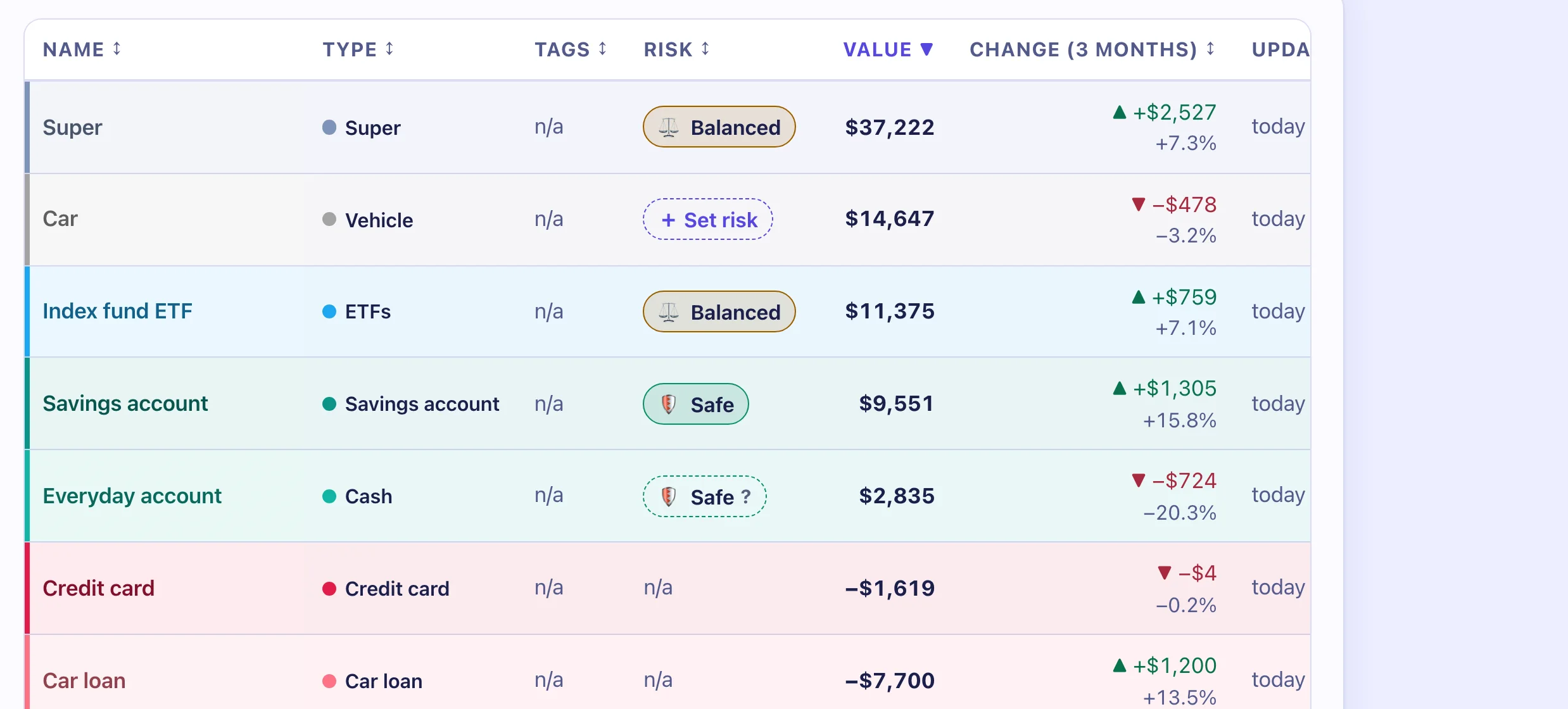
Choose the investments that count
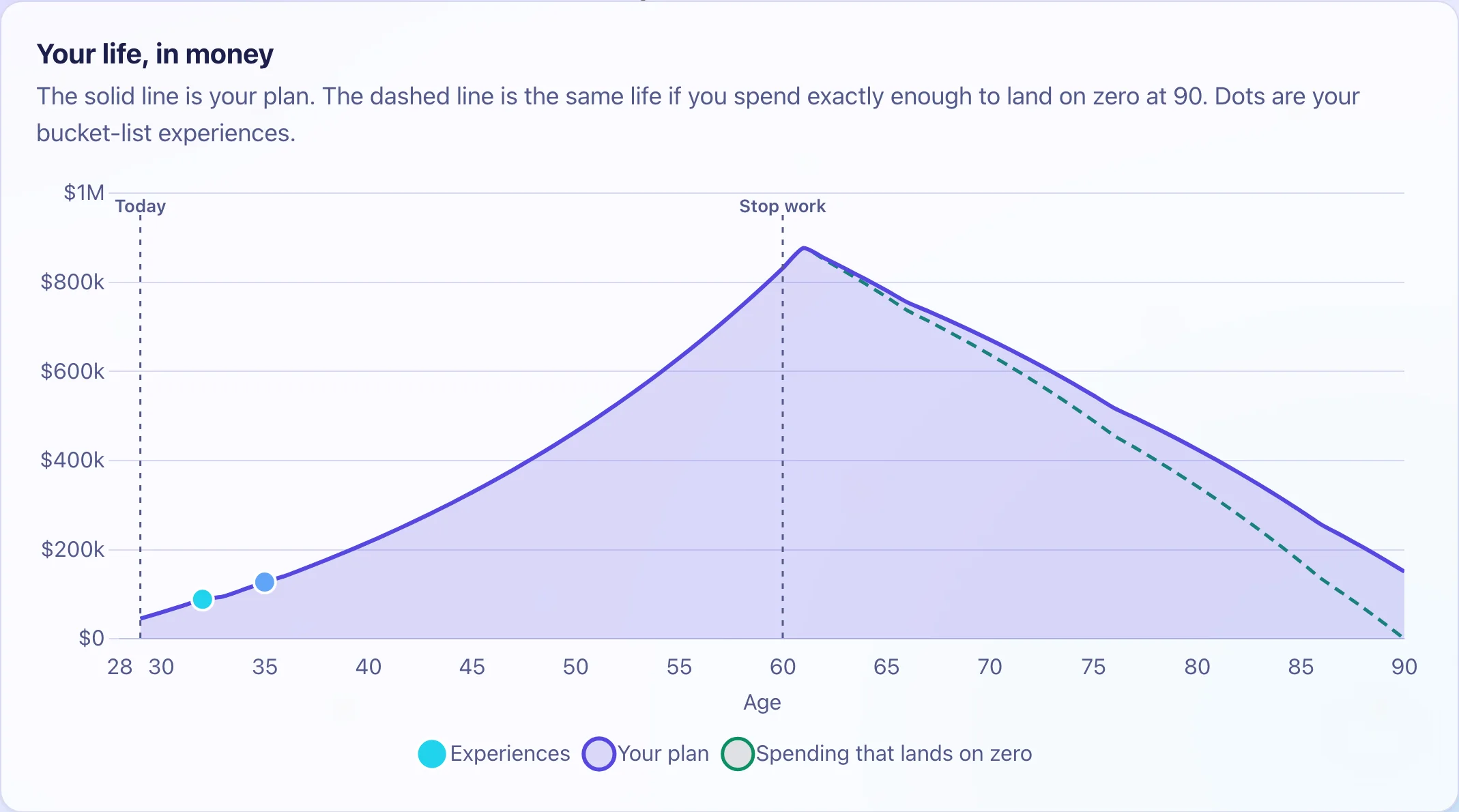
The chart plots your money by age
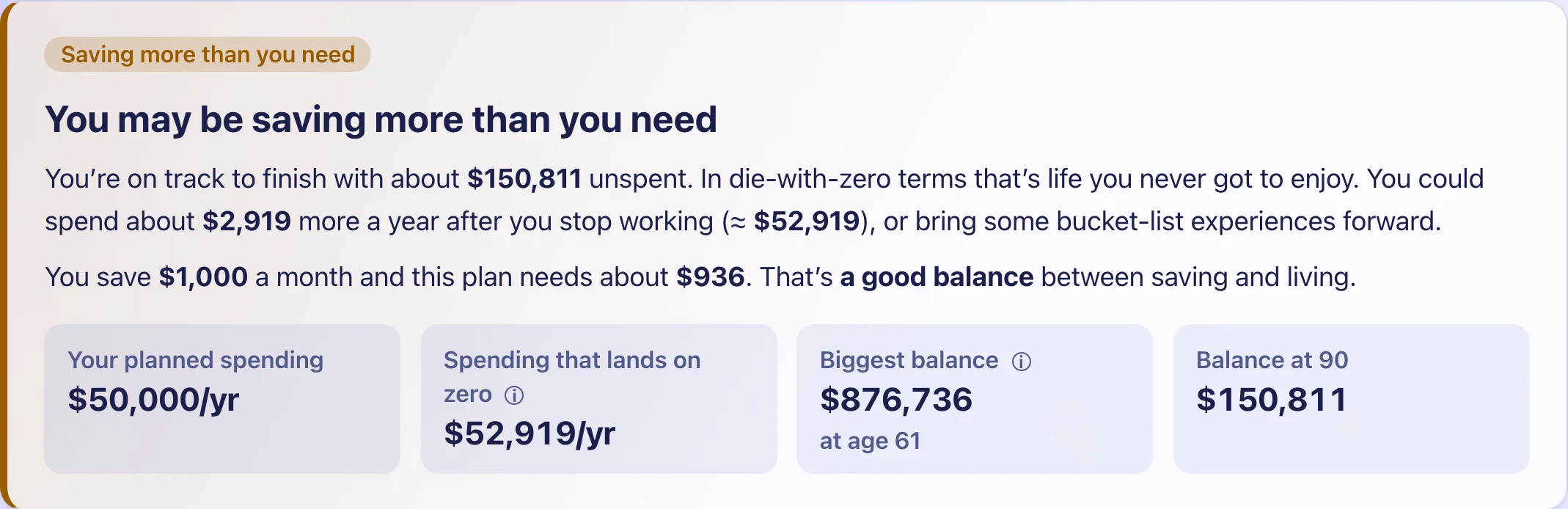
The verdict shows what lands near zero
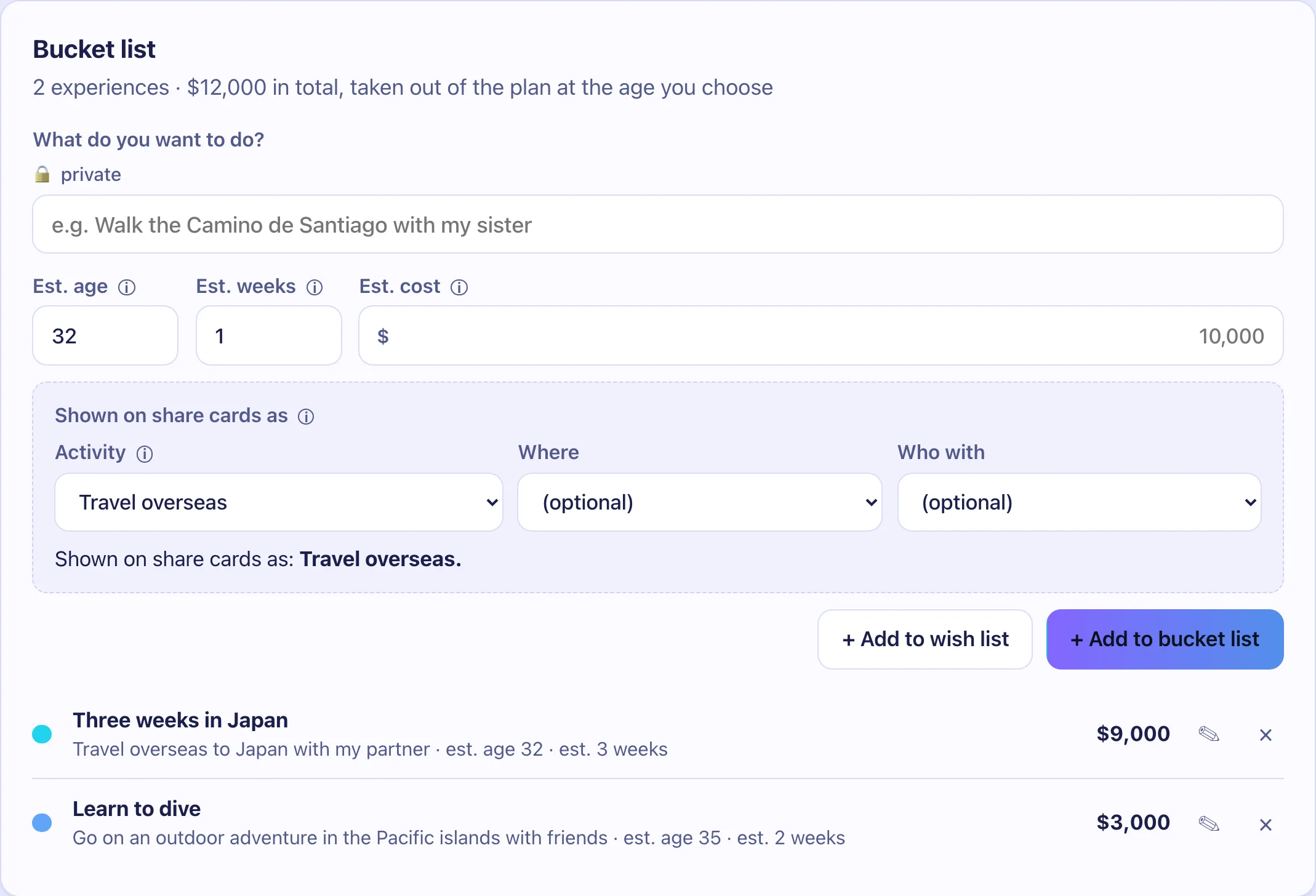
Bucket-list experiences go in with an age and a cost


Setup takes about a minute.
Does it mean spending everything?
It shows whether you are saving far more than you need. You can set an amount to leave behind.
Which investments count?
You choose which ones count. Many people leave out the home they live in.
Is it in today’s dollars?
Yes. Growth is after inflation, 4% by default.
